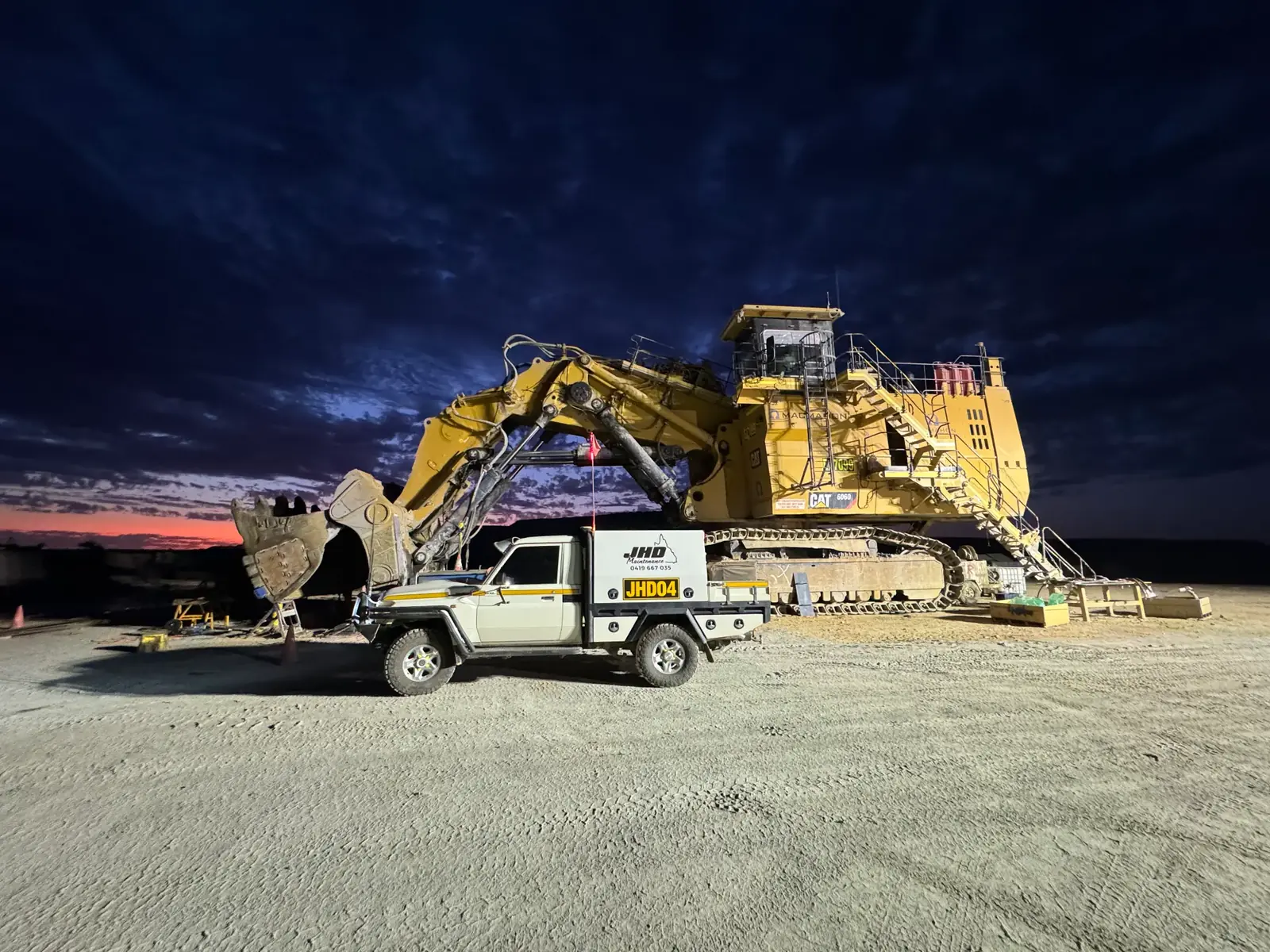
Breakdown Support
Mining Equipment Breakdown: What to Tell Your Field Mechanic
When mining equipment breaks down, give the field mechanic the machine details, site location and a clear account of what happened.
This guide helps the person arranging support gather useful information that is already available, without testing or trying to repair the fault.
Start with the machine and its location
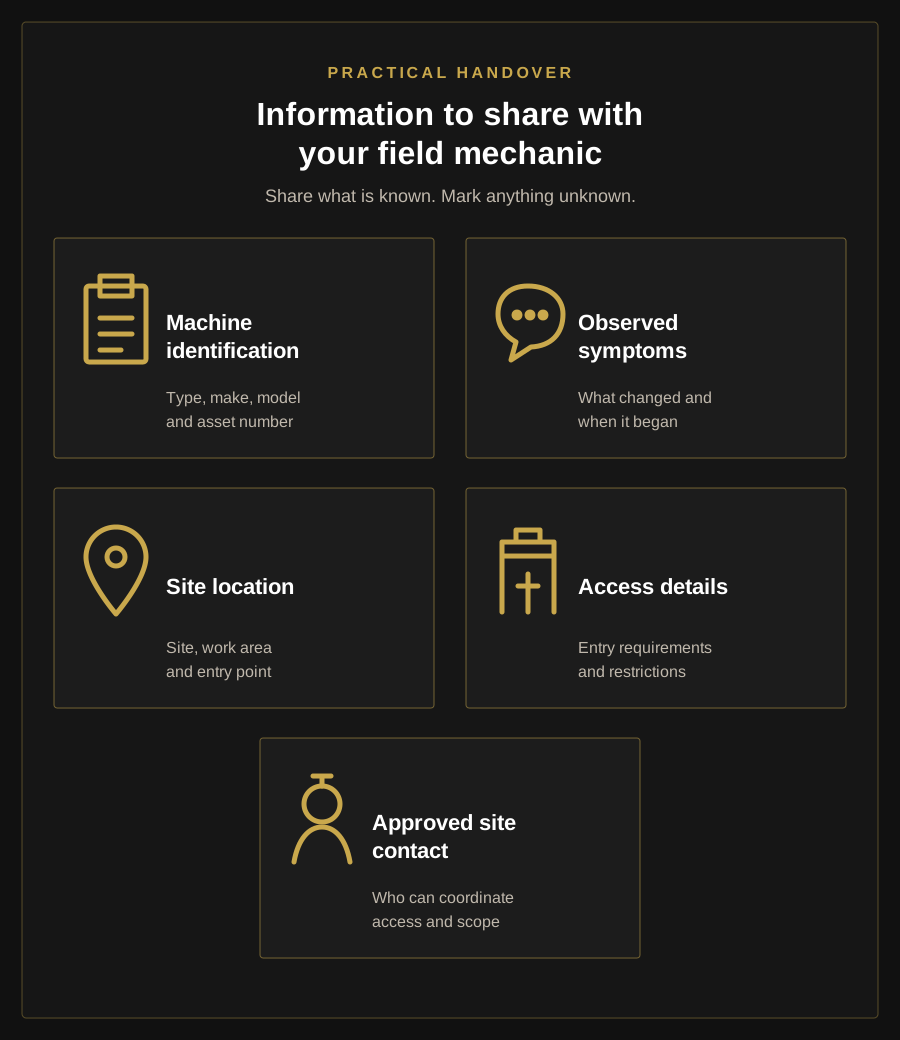
A clear call starts with knowing which machine needs help and where it is. The equipment type, make, model and fleet or asset number give the mechanic a useful starting point. A serial number can help too, if it is already in the machine records.
The site name matters as much as the nearest town. A large mine may have several gates, work areas and access roads, so “near the workshop” can mean different things to different people. The machine's area and the agreed entry point help the site contact explain where support is needed.
Missing information is worth mentioning. “Model not yet confirmed” is clearer than a guess that sends the conversation towards the wrong machine. There is no need to approach a hazard to read an identification plate.
Describe what happened, rather than naming a fault
The most useful description is what the operator noticed: what changed, when it began and what the machine was doing at the time. Whether the problem came and went or continued until the equipment was taken out of use also gives the mechanic context.
For example, “the attachment moved more slowly towards the end of the shift” is an observation. “The pump has failed” is a diagnosis. Keeping those separate leaves room for the mechanic to assess the cause rather than treating the first guess as the answer.
When the report comes from another person, their name or role helps follow-up questions reach the right source through the site's usual contact process. It also makes clear which details you saw yourself and which were passed on.
Share existing codes, photos and maintenance records
An exact warning message already recorded is more useful than a half-remembered code. Existing photos, defect reports and work orders can also help explain what happened. Recent service or repair records give the mechanic background without proving that the latest work caused the breakdown.
The aim is to bring together what is already known, not create a new set of test results. There is no need to restart or operate equipment, clear codes, dismantle parts or take readings for this handover. Photos and records should go through the site's approved sharing process.
A missing record need not turn into a guessed answer. Knowing that the last service date or warning text is unconfirmed gives the mechanic a clearer picture of the information available for the assessment.
Explain site access and who can authorise the work
The person arranging entry may be different from the person approving the job. A named site contact and phone number, along with the entry point, induction requirements and known access restrictions, help the mechanic understand who to speak with before a visit is arranged.
The machine's current work status matters too. Pass on the status recorded by the authorised site person and who is managing it. A report that equipment has stopped does not, by itself, mean it is safe to inspect or ready to return to work.
Site emergency, safety and isolation procedures remain in charge. If someone is at risk, the site's emergency response comes first; gathering details for a service enquiry can wait. This guide does not replace those procedures or an authorised assessment.
Keep a short handover ready for the call
Once the details are together, a short summary makes the conversation easier to follow. It can sit in the existing site record, so the mechanic and the next shift receive the same account.
- Machine: type, make, model and fleet or asset number.
- Location: site, machine area and agreed entry point.
- Symptoms: what changed, when it began and any warning already recorded.
- History: available defect reports, recent work and existing photos.
- Contact and access: site contact, entry requirements, recorded work status and person who can approve the scope.
Here is an illustrative example, not a real JHD job: “Excavator EX-12 is at the south maintenance area. The operator reported slower attachment movement late in the shift. The model and warning code are not yet confirmed. A defect report and last service record are available. The maintenance supervisor is coordinating access and can confirm the machine's status and who can approve the assessment.”
That summary gives the mechanic something concrete to ask about without claiming to know the cause. If the shift changes, the same record can carry any new information and the agreed next step.
Agree the assessment and next step
The first call is a chance to clarify what information is missing and how an assessment could be arranged. Attendance, access, parts and repair scope depend on the actual job. A useful handover helps that discussion; it cannot confirm a fault or promise a repair in one visit.
JHD's mining breakdown support service is the relevant pathway for an urgent mechanical enquiry. The machine details, symptoms and location give the team context to discuss what support can be arranged.
About JHD Maintenance: JHD provides field mechanical support for heavy equipment across Western Australia and Central Queensland. Its services include breakdown support, maintenance and hydraulic diagnostics.
To discuss an assessment, share the details you already have with JHD's field service mechanics. The team can then discuss the scope and next step with your site contact.